
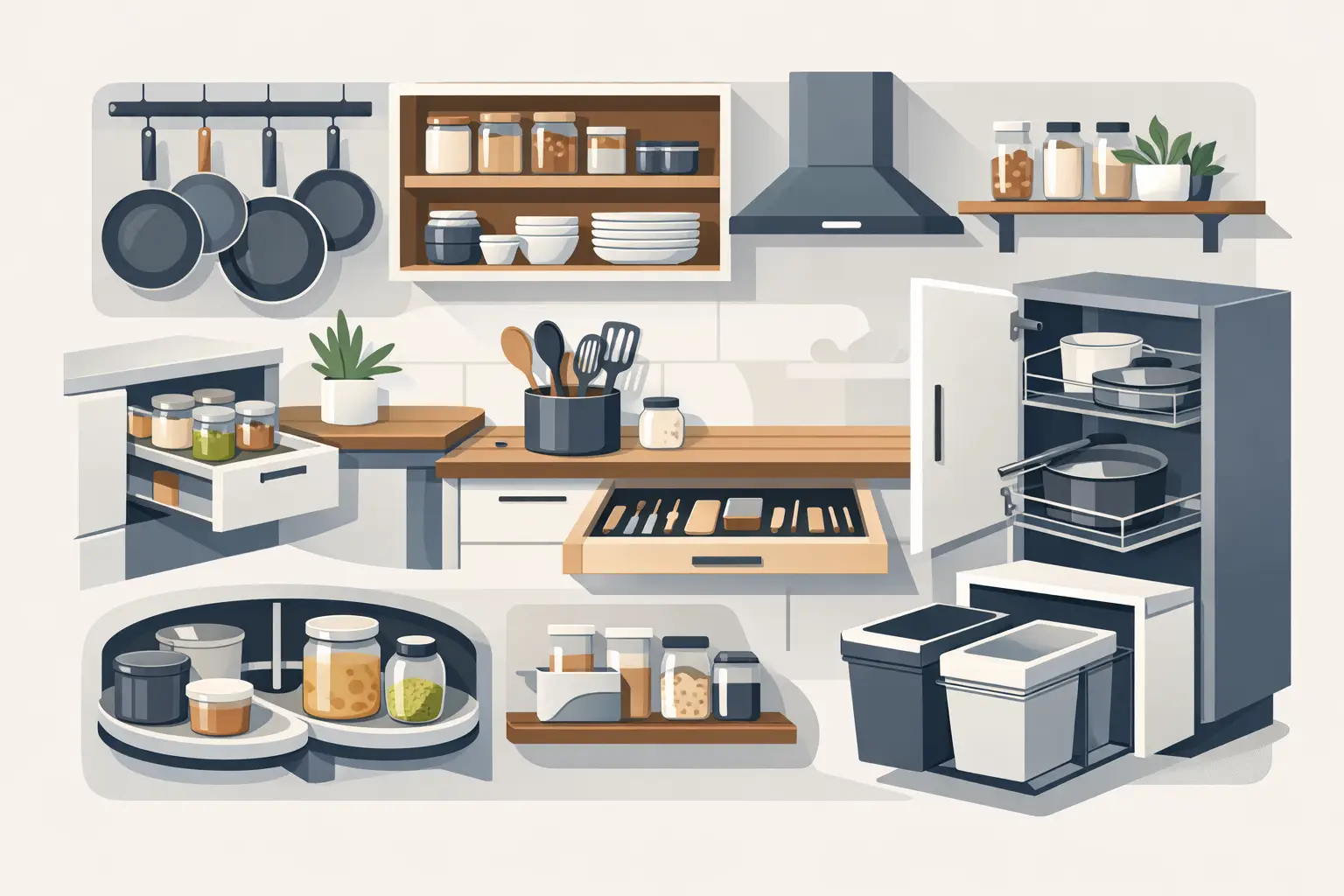
A kitchen can have attractive cabinets and new countertops yet still feel frustrating every morning. The usual problem is not a lack of square footage. It is storage that makes everyday items hard to reach, corners hard to use, and countertops carry more than they should. The best kitchen storage upgrades correct those daily friction points with components built for the way a household actually cooks, cleans, and entertains.
For San Diego County property owners, storage improvements can also be a practical way to extend the useful life of a kitchen without committing to a complete renovation. The right solution depends on cabinet condition, household needs, available space, and the quality of the installation. A low-cost organizer can help in the short term, but well-planned cabinet modifications and custom storage often deliver better access, cleaner finishes, and lasting value.
Start With How the Kitchen Is Used
Before choosing pull-outs, inserts, or a pantry system, look at where clutter collects. A crowded counter near the coffee maker may point to insufficient appliance storage. A cabinet full of stacked pans may need deep drawers. If groceries disappear behind a narrow pantry door, the issue is likely access rather than pantry size.
This review should include the people who use the kitchen most. A family may need snack access at a lower height and a clear zone for lunch supplies. An avid cook may prioritize cookware, spices, knives, and food-prep tools near the range. A rental or managed property may benefit from straightforward, durable storage that is easy for different residents to understand and maintain.
Measure the cabinet boxes, door swings, drawer clearances, and nearby appliances before selecting hardware. A storage upgrade is only useful if it can open fully without hitting an island, refrigerator handle, or dishwasher door. This planning also identifies whether existing cabinets are strong enough for heavier pull-out systems and loaded drawers.
Best Kitchen Storage Upgrades for Everyday Access
Full-extension drawer upgrades
Deep drawers are among the most useful improvements in a working kitchen. Unlike lower cabinets with fixed shelves, drawers bring pots, pans, serving dishes, and small appliances out into view. Full-extension drawer slides allow the drawer to travel far enough that items at the back are accessible without kneeling or unloading the front.
For cookware, use dividers or adjustable peg systems to prevent stacks from shifting. Drawer boxes should be properly constructed and slides should be rated for the expected load. This is not a place to cut corners: cast-iron cookware, dishes, and small appliances can place significant stress on weak hardware and poorly secured cabinet components.
Deep drawers do reduce open cabinet space, so they work best where accessibility matters more than storing tall items. They are especially effective in base cabinets near the cooking area and in islands used for prep work.
Pull-out shelves for lower cabinets
Pull-out shelves are a strong option when the existing cabinet layout is sound but the lower storage is difficult to use. Each shelf slides forward, bringing canned goods, mixing bowls, cleaning supplies, or countertop appliances into reach. They can often be added to existing cabinet boxes, making them a targeted improvement rather than a full cabinet replacement.
The key consideration is installation precision. Pull-outs need level, securely mounted slides and enough side clearance to operate consistently. Cabinet interiors may also need repair or reinforcement before hardware is added, particularly in older kitchens where moisture, sagging shelves, or previous leaks have weakened the base.
For households with limited mobility, pull-out shelves can make a meaningful difference. They reduce bending, reaching, and the need to search in dark cabinet corners. In a kitchen used by several generations, that improved access can be more valuable than another decorative feature.
Corner cabinet solutions
Corner cabinets often contain some of the least accessible space in a kitchen. Traditional lazy Susans remain useful for many layouts, particularly when properly sized and built with sturdy rotating hardware. They work well for dry goods, bowls, and lighter cookware.
For higher-end cabinet systems, a blind-corner pull-out can use space that would otherwise be unreachable. These systems bring baskets or shelves out in stages, providing access to the rear portion of the cabinet. They cost more than a basic rotating shelf and require careful measurement, but they can be worthwhile in kitchens where every cabinet matters.
Not every corner needs a complex mechanism. Sometimes the most dependable answer is a simple fixed shelf with a clear purpose, such as storing seldom-used serving pieces. The right choice depends on what is stored there and how often it needs to be reached.
A pantry that shows what you own
A pantry should prevent duplicate purchases, not hide food until it expires. Adjustable shelves are a practical starting point because they allow cereal boxes, small appliances, bulk goods, and serving platters to fit without wasting vertical space. Shallow shelves are often easier to manage than one deep shelf, since items stay visible.
Tall pull-out pantry units can make narrow spaces work harder. They provide access from both sides and keep packaged food organized in vertical zones. However, these systems carry substantial weight when fully loaded, so cabinet anchoring, quality slides, and proper alignment are essential.
For walk-in pantries, consider a combination of open adjustable shelving, a designated appliance shelf, and lower pull-out bins. Open shelving is easy to inventory but requires a reasonable level of upkeep. Closed cabinets create a cleaner visual appearance, though they can conceal clutter if the interior layout is not planned well.
Trash, recycling, and cleaning pull-outs
Waste and recycling bins belong in a dedicated pull-out cabinet whenever the layout allows. This upgrade keeps containers out of sight, limits floor-level clutter, and creates a more efficient cleanup zone near the sink or dishwasher. Choose a system sized for the household’s actual waste volume, not just the cabinet opening.
A separate pull-out for cleaning supplies can also improve safety and organization. In homes with young children or pets, the cabinet should have an appropriate child-safety latch. Keep products away from food storage, and inspect the cabinet base for plumbing leaks before enclosing supplies in the space.
Vertical storage for trays and boards
Baking sheets, cutting boards, platters, and cooling racks are awkward when stored in horizontal stacks. Narrow vertical dividers turn a shallow cabinet or base cabinet into an organized zone where each item can be removed individually. This is a relatively compact upgrade with an outsized impact for households that cook often.
Placement matters. A divider cabinet near the oven is ideal for sheet pans and baking dishes. A slot near the prep area works better for cutting boards. Quality carpentry ensures dividers are secure, evenly spaced, and finished to match the surrounding cabinet interior.
Cabinet-door storage, used carefully
The inside of a cabinet door can hold spices, wraps, lids, or small cleaning tools. It is useful space, but only when the added organizer will not interfere with shelves, drawers, or door hinges. Overloaded door racks can strain hinges and cause doors to sag over time.
This upgrade is best for lightweight items and shallow organizers. It should complement the primary storage plan rather than become a catch-all for kitchen clutter.
Coordinate Storage With Kitchen Systems
Storage work can involve more than cabinetry. Relocating a pantry, adding an appliance garage, or changing a cabinet run may affect electrical outlets, plumbing lines, flooring, drywall, and finish carpentry. A dependable project plan considers these conditions before installation begins, not after cabinets have been removed.
This is particularly relevant when storage is part of a larger kitchen remodel. New drawers may require cabinet modifications. A sink-base pull-out must work around plumbing. A charging drawer or appliance cabinet needs safe electrical planning. Coordinating these details under one experienced construction team helps prevent mismatched work, avoidable delays, and costly corrections.
For investment properties, durable finishes and straightforward hardware often make more sense than highly specialized systems. For a long-term family home, custom features that support daily routines may justify a larger investment. Both approaches can protect property value when the work is properly designed and installed.
Choose Quality Hardware and Installation
Storage upgrades are used repeatedly, often several times a day. Soft-close hinges, full-extension slides, secure mounting, and cabinet boxes in good condition all affect long-term performance. The visible finish matters, but the hardware and preparation behind it determine whether drawers stay aligned and pull-outs continue to operate smoothly.
Experienced contractors should assess cabinet condition, confirm measurements, explain realistic options, and communicate clearly about any needed repairs. RTV Construction approaches kitchen improvements as durable property decisions, whether the work involves a focused cabinet upgrade or a complete kitchen renovation.
A well-organized kitchen should make daily tasks feel easier without demanding constant attention. Start with the cabinets that create the most frustration, invest in components that match how the space is used, and give the installation the same care you expect from the rest of your property.
Leave a Reply