
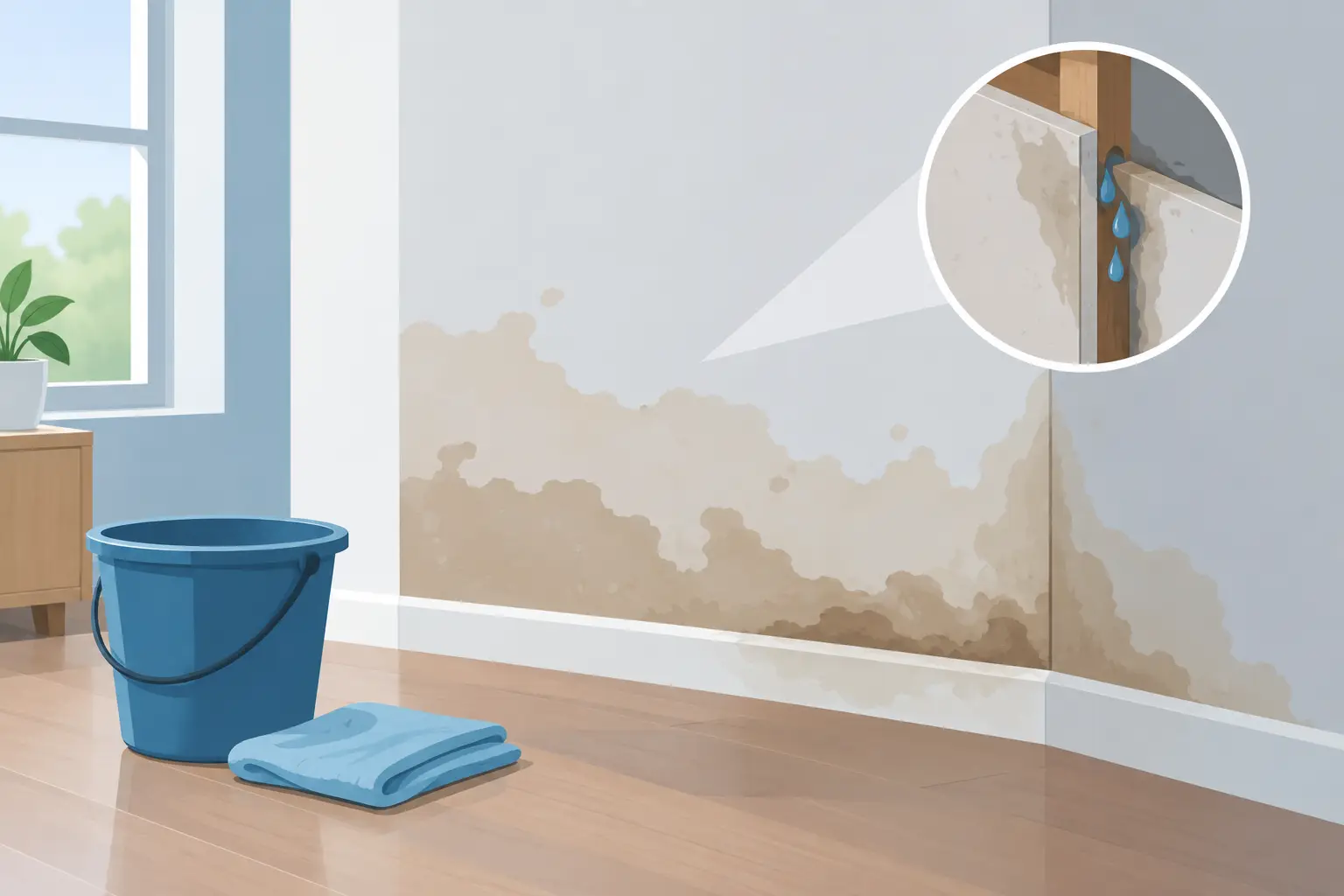
A small brown spot near a ceiling, baseboard, or window can be easy to dismiss. But can drywall water damage spread? Yes. Moisture can travel farther than the visible stain, moving through drywall, insulation, framing, flooring, and adjoining rooms. The faster the water source is stopped and the affected area is dried, the more likely you are to avoid a larger repair.
For homeowners, property managers, and HOA boards, the issue is not only appearance. Wet drywall can lose structural integrity, support mold growth, damage finishes, and conceal an active plumbing or exterior-water intrusion problem. A careful assessment protects the building and helps prevent repeat damage after repairs are complete.
Can Drywall Water Damage Spread Beyond the Stain?
Drywall is made with a gypsum core covered by paper facing. That paper absorbs moisture readily, and the core can weaken when it stays wet. Water does not always remain where it first enters. Gravity pulls it downward, while capillary action can draw moisture along paper surfaces, wood framing, insulation, and floor materials.
A leaking pipe inside a wall may wet drywall on both sides of the partition. A roof or window leak can travel along framing members before showing up several feet away from the entry point. In multi-story homes, condominiums, and commercial buildings, a leak from an upper floor can affect ceilings, wall cavities, light fixtures, and finishes below.
The visible mark is therefore a clue, not a reliable boundary. A stain that appears minor may sit below a larger wet area. Conversely, an old stain may be dry and stable if the source was corrected long ago. Determining which situation applies requires checking for active moisture rather than judging the damage by color alone.
What Makes Water Damage Spread?
The speed and extent of spread depend on the source, volume of water, material conditions, and response time. Clean water from a newly discovered supply-line leak is often easier to manage than water that has been present for days. Water from a drain backup, sewage line, or exterior flooding requires more caution because contamination can affect which materials need removal.
A slow plumbing leak is particularly deceptive. It may release only a small amount of water at a time, yet keep drywall, insulation, and framing consistently damp for weeks. That ongoing moisture can create swelling, soft spots, peeling paint, musty odors, and microbial growth before a noticeable stain develops.
San Diego County properties also face exterior moisture risks. Failed window flashing, cracked stucco, deteriorated caulking, roof defects, and improperly sealed penetrations can allow rainwater into wall assemblies. Coastal humidity does not normally cause major drywall saturation on its own, but it can slow drying when a leak has already occurred.
Signs the Problem Is Still Active
Do not wait for drywall to collapse before investigating. Active or spreading damage often produces changes that become more obvious over time. Look for several warning signs, including:
- A stain that becomes darker, larger, or reappears after painting
- Drywall that feels soft, swollen, bubbled, or crumbly
- Peeling paint, lifted joint tape, or cracking near seams
- A persistent musty odor in a room, closet, or wall area
- Warped baseboards, buckled flooring, or damp carpeting near the wall
- Dripping, discoloration, or rust around ceiling fixtures and vents
A moisture meter, infrared scan, or small inspection opening can help identify the affected area with less unnecessary demolition. This matters because opening a wall too little can leave wet materials behind, while opening it too broadly can increase repair costs without improving the result.
When Wet Drywall Can Be Dried
Not every water event requires full drywall replacement. If the leak was stopped quickly, the water was clean, and the drywall is still firm, controlled drying may preserve the wall. Professional drying typically involves air movement, dehumidification, and moisture testing until materials reach acceptable levels.
Drywall can sometimes be saved after a minor, recent incident, especially if insulation was not saturated and the wall cavity is accessible for drying. Painted drywall may resist brief exposure better than unfinished material, but paint is not a waterproof barrier. Moisture can still enter through seams, fastener holes, cutouts, and edges near the floor.
The key trade-off is between drying time and material condition. Keeping apparently intact drywall is sensible when it can be thoroughly dried and verified. Trying to save soft, delaminated, mold-affected, or contaminated drywall often leads to odors, recurring stains, and another repair later.
When Drywall Should Be Removed and Replaced
Replacement is commonly the better long-term decision when drywall has lost strength or cannot be dried reliably. This may include walls with significant swelling, crumbling gypsum, separated paper facing, visible mold growth, or wet insulation behind them. Drywall affected by sewage, gray water, or floodwater generally needs more extensive removal because drying alone does not address contamination.
Ceiling drywall deserves prompt attention. Once saturated, it becomes heavy and can sag or fail suddenly. Keep people away from a bulging ceiling area, avoid disturbing light fixtures, and arrange for evaluation as soon as possible. If water is near electrical equipment, shut off power to the affected area if it is safe to do so and have the condition assessed by a qualified professional.
Proper replacement is more than cutting out the stained section. The water source must be corrected first. Then the cavity should be dried, damaged insulation removed as needed, framing checked for moisture or deterioration, and new drywall installed, taped, textured, and painted to match the surrounding finish. Skipping the investigation stage can leave the real cause hidden behind a clean-looking patch.
Stop the Source Before Repairing the Finish
Painting over water damage or applying stain-blocking primer too early only hides evidence temporarily. If moisture remains, the stain may return, paint can blister, and drywall deterioration can continue behind the surface.
For a plumbing-related issue, the repair may involve a supply line, drain connection, shower pan, appliance line, or fixture seal. For exterior intrusion, the solution could involve roofing, flashing, stucco repair, window sealing, or door installation details. In some properties, more than one condition is contributing to the problem.
This is where a full-service repair approach has practical value. Instead of treating the drywall as an isolated cosmetic issue, RTV Construction can coordinate the repair work around the cause, drying requirements, wall restoration, and finish work. That approach helps property owners avoid managing separate trades while a leak remains unresolved.
What to Do in the First 24 Hours
Fast action can limit how far water travels. If the source is safe to access, stop the water and move furniture, rugs, and valuables away from the affected area. Place containers under active drips, but do not puncture a ceiling or open a wall without understanding what may be inside.
Use fans and dehumidification for minor clean-water incidents, but recognize their limits. Household fans may dry a wall surface while insulation or framing inside remains wet. Avoid using standard vacuum equipment on standing water, and do not use electrical devices near wet outlets, fixtures, or wiring.
Document the condition with photos before cleanup, especially for rental, HOA, commercial, or insurance-related situations. Then arrange for an assessment if the water entered a wall or ceiling cavity, the drywall feels soft, the affected area is larger than a small isolated spot, or you cannot identify the source.
A Small Stain Deserves a Clear Answer
Water-damaged drywall is not always a major restoration project, but it is rarely something to ignore. The right response depends on whether the area is actively wet, how long moisture has been present, what type of water is involved, and whether nearby materials have been affected.
Addressing the cause early gives you more repair options and a better chance of preserving finishes, preventing mold, and protecting the value of the property. If a wall or ceiling is changing, damp, or unexplained, treat it as a maintenance issue that needs a clear diagnosis before it becomes a larger construction repair.
Leave a Reply