
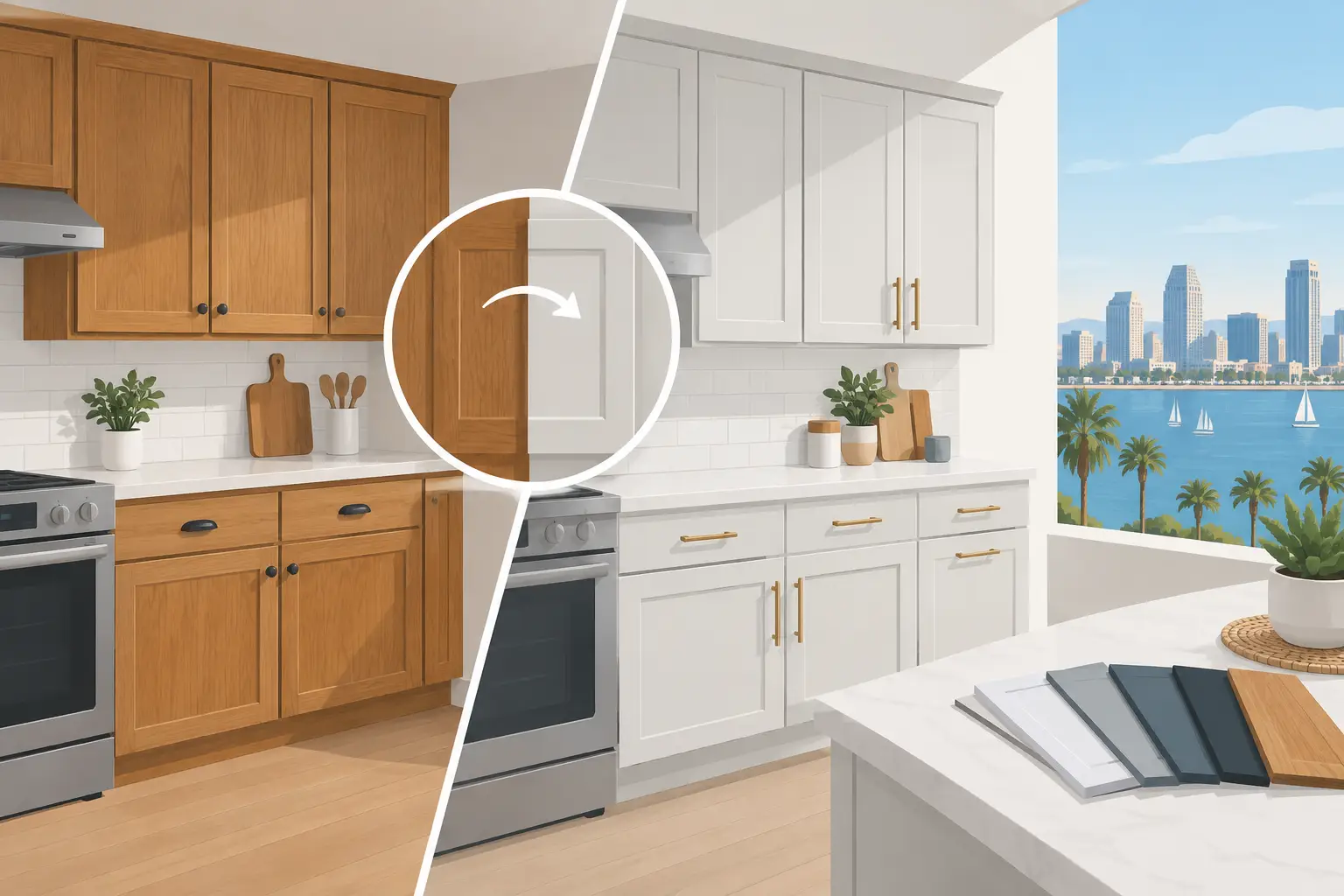
A kitchen can feel dated long before its cabinet boxes stop doing their job. When the layout works, the boxes are structurally sound, and storage still meets your needs, cabinet refacing can deliver a substantial visual upgrade without the cost and disruption of a full replacement. Understanding cabinet refacing cost starts with one practical question: are the existing cabinets truly worth saving?
For San Diego County homeowners, property managers, and HOA communities, the answer often depends on condition, finish expectations, and how many related repairs are needed. Refacing is not simply a cosmetic shortcut. Done correctly, it is a finish carpentry project that relies on accurate measurements, durable materials, careful door alignment, and attention to the details that make a kitchen look complete.
What Cabinet Refacing Typically Costs
Most cabinet refacing projects fall roughly between $4,000 and $12,000 for an average kitchen. Smaller kitchens with straightforward cabinet runs may cost less, while large kitchens, premium wood veneers, custom door styles, new hardware, and related repairs can move the project well above that range.
A useful planning figure is often $150 to $500 or more per linear foot of cabinetry. This range is broad because a linear foot does not tell the entire story. A cabinet run with many drawers, tall pantry units, glass-front doors, decorative end panels, and crown molding requires more material and more precise labor than a simple base cabinet wall.
In coastal and higher-cost areas of San Diego County, labor availability, site access, finish quality, and material selection can also influence pricing. The most dependable estimate comes after an in-person review of the cabinet boxes, doors, surrounding walls, and the work needed to produce a lasting result.
What Is Included in Cabinet Refacing?
Traditional refacing keeps the existing cabinet boxes in place. The visible face frames and exterior surfaces receive new veneer or laminate, while the doors and drawer fronts are replaced. New hinges, pulls, knobs, and trim may also be included.
The goal is a coordinated finish, not a patchwork of old and new materials. Quality work requires the face frames to be properly prepared, veneers to be fitted cleanly around openings and corners, and doors to be installed with even reveals. Small alignment errors are noticeable every time a cabinet is opened or viewed in natural light.
Depending on the project scope, a refacing contractor may also address minor cabinet repairs, replace worn drawer boxes, add soft-close hinges, install new molding, modify a cabinet for an appliance, or adjust a layout feature that no longer functions well. These items can be worthwhile, but they should be clearly separated in the estimate so the project budget remains easy to understand.
The Factors That Drive Cabinet Refacing Cost
Cabinet count and configuration have the greatest effect on price. More doors and drawer fronts mean more custom components, more hardware, and more installation time. Tall cabinets, corner cabinets, islands, and cabinets with detailed trim usually require additional measuring and fitting.
Material choice is another major variable. Thermofoil and laminate finishes can provide a clean, budget-conscious update in the right application. Wood veneer, solid wood doors, and specialty finishes typically cost more but may better suit a higher-end kitchen or a property where long-term appearance is a priority. The right choice depends on the home, expected use, maintenance expectations, and the surrounding finishes.
Door style also matters. Simple shaker doors are often more economical than heavily routed, raised-panel, inset, or custom-profile doors. Glass inserts, open shelving conversions, decorative panels, and under-cabinet lighting add visual value but should be treated as scope additions rather than assumed parts of a basic refacing price.
Condition can change the equation quickly. Cabinet boxes affected by water damage, swollen particleboard, loose face frames, pest damage, or severe warping may not be good candidates for refacing. A responsible contractor should identify these issues before ordering materials. Covering compromised boxes with new finishes may improve appearance temporarily, but it does not protect the investment.
Finally, consider adjacent work. A new countertop may expose uneven walls or require backsplash replacement. Changing appliances can require cabinet modifications, electrical updates, plumbing changes, flooring repairs, or drywall patching. Coordinating those needs under one project plan can prevent avoidable delays and reduce the risk of one trade damaging another completed surface.
Refacing vs. Painting vs. Replacing Cabinets
Painting is usually the least expensive route, especially when cabinet doors are in good condition and the goal is a color change. It can be an effective option for solid wood cabinets, but successful cabinet painting depends heavily on preparation, surface condition, and the durability of the coating system. It does not correct worn door profiles, failing drawer fronts, poor storage design, or damaged cabinet boxes.
Refacing costs more than painting because it includes new doors and drawer fronts, new exterior finishes, and more involved carpentry. In return, it can change the cabinet style, update the hardware, and provide a more complete visual reset while preserving a functional layout.
Full cabinet replacement is generally the better choice when the kitchen needs a new layout, the existing boxes are damaged, storage is inadequate, or plumbing and electrical changes require significant reconfiguration. Replacement allows for deeper cabinets, improved drawer systems, new pantry solutions, and layout changes that refacing cannot provide. It also creates more demolition, more project time, and a higher total budget.
There is no single best choice for every property. A well-built cabinet box that is level, secure, and properly located can make refacing a strong value. A poorly built or water-damaged cabinet system should not be preserved just because refacing appears less expensive at first.
How to Review a Refacing Estimate
A clear cabinet refacing estimate should identify the door and drawer-front style, finish material, hardware, veneer or panel work, trim, installation labor, and any repairs or modifications. It should also explain what is not included, such as countertops, backsplash tile, painting, appliance installation, electrical work, plumbing work, or permit-related requirements.
Ask how the contractor will handle hidden conditions discovered after work begins. For example, removing an old countertop may reveal wall damage, moisture issues, or gaps that were not visible during the initial visit. A professional process does not mean surprises never occur. It means the contractor communicates clearly, documents the condition, and provides options before expanding the scope.
It is also wise to confirm the expected project sequence. Cabinet refacing often affects countertops, sinks, appliances, flooring transitions, and wall finishes. Careful scheduling protects newly finished surfaces and keeps the kitchen out of service for the shortest practical period.
When Refacing Is a Sound Investment
Refacing tends to make the most financial sense when you want a meaningful upgrade without moving major utilities or changing the kitchen footprint. It is particularly effective in homes with quality cabinet construction that no longer matches the desired style, as well as rental and managed properties where durable finishes and dependable coordination matter.
For homeowners preparing to stay in the property, the value is often measured in daily use as much as resale appeal. Updated doors, reliable hardware, clean finishes, and properly functioning drawers can make the kitchen easier to maintain and more enjoyable to use. For investors and property managers, a cohesive cabinet update can improve presentation while avoiding the extended downtime of a full gut renovation.
The lowest quote is not always the lowest ownership cost. Poor fit, weak materials, misaligned doors, and incomplete trim can lead to callbacks and premature replacement. Experienced workmanship, accurate planning, and clear communication are what turn a cabinet update into a durable property improvement.
Before committing to a finish or a budget, have the cabinet boxes and the surrounding kitchen conditions evaluated as a whole. A detailed on-site assessment gives you a better basis for deciding whether refacing will protect your investment or whether replacement is the smarter long-term path.
Leave a Reply