
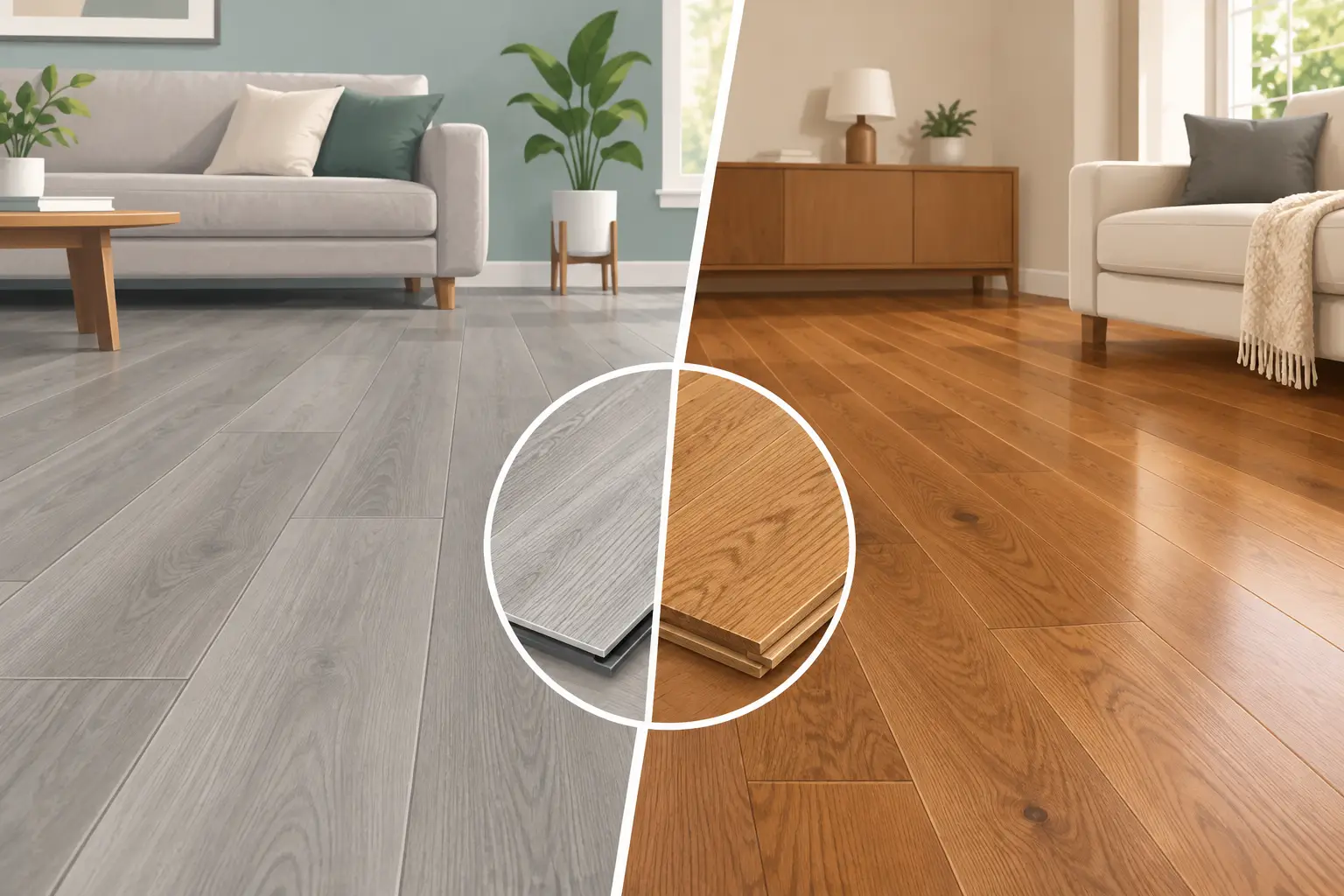
A floor can look excellent on installation day and still be the wrong choice for how a property is actually used. The decision between vinyl versus hardwood flooring affects cleaning routines, repair needs, tenant turnover, resale appeal, and how well the space holds up against pets, moisture, sand, and daily traffic.
For San Diego County property owners, the better material is rarely the one with the most dramatic showroom display. It is the one that fits the room, the building conditions, and the level of maintenance the property will receive over time.
Vinyl Versus Hardwood Flooring: The Real Difference
Vinyl flooring is a manufactured material available in sheet, tile, and plank formats. Luxury vinyl plank, often called LVP, is especially common in remodeling because it can resemble wood while offering water resistance and a relatively forgiving surface underfoot. Quality varies substantially, from basic products for low-cost updates to thicker, more durable planks designed for active households and commercial use.
Hardwood is a natural wood floor, either solid hardwood or engineered hardwood. Solid hardwood is milled from a single piece of wood and can usually be refinished several times. Engineered hardwood has a real wood veneer over layered backing materials, giving it greater dimensional stability in some environments while preserving the appearance of natural wood.
Both materials can add value when chosen and installed correctly. The difference is that hardwood offers a genuine, long-lasting material with a distinctive character, while vinyl is built around practical moisture resistance, easier upkeep, and budget control.
Where Vinyl Flooring Makes the Most Sense
Vinyl is often the more practical choice in rooms exposed to water, spills, and frequent cleaning. Kitchens, bathrooms, laundry rooms, ground-floor condominiums, rental homes, and busy entry areas are common examples. While no floor should be treated as immune to plumbing leaks, quality vinyl is far less likely than hardwood to stain, swell, or warp after routine moisture exposure.
This matters in coastal and high-traffic properties. Sand tracked in from outdoors can act like sandpaper under shoes and furniture, and wet towels, pet bowls, and everyday spills create predictable maintenance risks. Vinyl makes those risks easier to manage. A regular sweep and damp mop are usually enough to keep it presentable.
Vinyl also works well when a project requires visual consistency across several rooms without the cost and environmental limitations of running real wood throughout the property. Modern vinyl products offer convincing grain patterns, plank widths, and tones, including finishes that complement updated cabinetry, tile, and painted interiors.
For landlords, HOA-managed units, and commercial spaces, vinyl can reduce turnover concerns. Damaged individual planks may be repairable, depending on the locking system and installation method, and the material does not require periodic refinishing. That predictability can be valuable when maintaining multiple units or planning improvements around occupied spaces.
Vinyl is not automatically the lowest-cost option once labor, floor preparation, trim work, and product grade are included. A premium LVP installation can be a meaningful investment. Still, it often provides a favorable balance of performance and upfront cost in spaces where hardwood would face repeated moisture or wear challenges.
When Hardwood Is Worth the Investment
Hardwood remains difficult to match in living rooms, dining rooms, bedrooms, hallways, and other dry interior spaces where a property owner wants warmth, authenticity, and lasting appeal. Each board has natural variation in grain and color. Rather than looking manufactured, hardwood develops character over time.
For a well-maintained owner-occupied home, hardwood can be a strong long-term property decision. It may be refinished when the finish becomes dull, scratched, or dated, allowing the floor to be renewed instead of replaced. That repairability is one of hardwood’s most important advantages.
Hardwood can also support the perception of quality in higher-end homes and renovations. Buyers often recognize real wood as a premium material, particularly when it is installed continuously through key living areas and finished with careful attention to transitions, baseboards, doors, and adjacent flooring.
However, hardwood asks more of the owner. Standing water should be cleaned promptly, furniture needs protective pads, and abrasive debris should not be left on the floor. Direct sun can gradually alter the color of natural wood, while changes in indoor humidity can cause seasonal movement between boards. Those characteristics are normal, but they need to be considered before selecting the material.
Engineered hardwood can be a useful middle ground. It provides a genuine wood surface while typically offering more stability than solid hardwood over properly prepared subfloors. The thickness of its wear layer matters because it affects whether and how often the flooring can be refinished later.
Moisture and Subfloor Conditions Should Decide More Than Style
The room below the flooring is as important as the material visible on top. A beautiful floor installed over an uneven, damp, or poorly prepared subfloor can develop gaps, movement, noise, and premature wear.
Before installation, the existing floor should be evaluated for flatness, moisture concerns, damaged areas, and height transitions at doors and adjacent rooms. Concrete slabs require particular attention because moisture vapor can affect flooring systems even when the surface appears dry. Older homes may also need repair work before new flooring is installed, including subfloor patching, leveling, or replacement of damaged materials.
Hardwood is less forgiving of moisture problems. It should not be installed in locations with unresolved leaks, chronic dampness, or conditions outside the manufacturer’s requirements. Vinyl handles routine surface moisture well, but it still needs a sound, properly prepared base. Thin vinyl products can telegraph imperfections from the floor underneath, making cracks, low spots, or debris more visible after installation.
Professional preparation protects the appearance and service life of both materials. Skipping that work to reduce the initial cost often creates a more expensive repair later.
Maintenance, Repairs, and Daily Use
Vinyl is generally easier to maintain. Sweep away grit regularly, use cleaning products approved for the specific floor, and avoid harsh abrasives. Many vinyl finishes resist staining and scuffing well, which makes them practical for properties with children, pets, or frequent guests.
Hardwood needs a more deliberate routine. Dry mopping and vacuuming with a hard-floor setting help prevent surface scratches. Spills should be wiped up quickly, and cleaners should be formulated for wood floors. Refinishing can restore a worn hardwood floor, but it is still a project that requires planning, dust control, and temporary disruption.
Repair options depend on the damage. A deep gouge in hardwood may be repaired, blended, or addressed during refinishing. A damaged vinyl plank may be replaced, but that process is easiest when matching material is kept from the original installation. Property owners should save an extra carton of vinyl flooring for future repairs whenever possible.
Neither option is maintenance-free. Vinyl reduces sensitivity to water, while hardwood provides more opportunities for renewal. The better choice depends on whether the property needs daily resilience or a material that can be restored over decades.
Cost Should Include the Full Scope of Work
Material price alone does not tell the whole story. Flooring budgets should account for demolition and disposal, subfloor preparation, moisture protection where needed, underlayment, transitions, trim, moving furniture, and repairs to nearby baseboards or drywall. The layout can also affect cost, especially where many closets, angled walls, stairs, or room transitions require detailed cuts.
Vinyl typically has a lower entry cost than hardwood, although higher-grade vinyl can narrow the difference. Hardwood has a higher material and installation cost in many cases, but it may deliver value through longevity and market appeal when installed in the right setting.
For a rental or managed property, the most cost-effective decision may be a durable vinyl product that is easy to clean and replace. For a long-term primary residence, hardwood in dry living areas may justify the investment, while vinyl handles kitchens, baths, and utility spaces. Combining materials is often a more sensible solution than forcing one flooring type into every room.
Choose the Floor That Supports the Property Plan
Start with how the space will be used five years from now, not only how it will photograph after a remodel. Consider water exposure, expected traffic, maintenance habits, occupants, subfloor conditions, and whether the property is a primary residence, rental, commercial space, or HOA common area.
A dependable flooring installation also requires coordination with the rest of the project. Cabinet heights, door clearances, appliance placement, baseboard details, and transitions to tile all affect the final result. RTV Construction approaches these details as part of protecting the property’s finish and function, not as afterthoughts once the flooring arrives.
The strongest flooring choice is the one that matches the room’s demands, receives proper preparation, and is installed with the care needed to perform well long after the project is complete.
Leave a Reply