
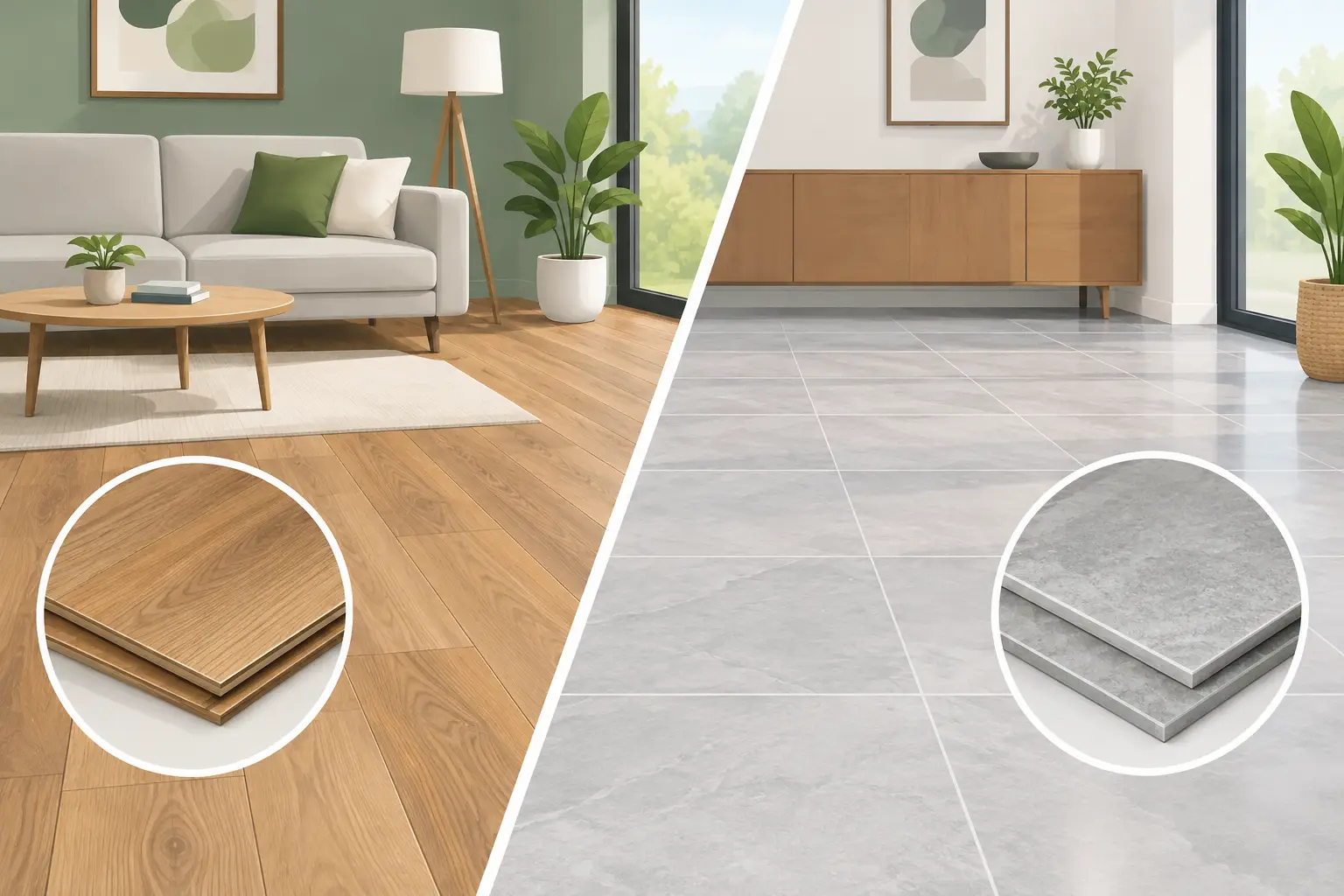
A floor can look finished on installation day and still be the wrong choice for the way a property is used. For homeowners, HOA boards, and property managers, the laminate versus tile flooring decision usually comes down to more than appearance. Water exposure, traffic, repair needs, noise, budget, and the expected life of the improvement all matter.
Both materials can be attractive, durable choices when installed correctly. The better option depends on the room, the building, and how much long-term performance matters compared with upfront cost. A bathroom floor has very different demands from a second-floor bedroom, a rental turnover, or a busy commercial entry.
Laminate Versus Tile Flooring: The Core Difference
Laminate flooring is a layered product with a photographic decorative surface protected by a wear layer. Modern laminate can closely resemble wood, stone, or concrete while providing a consistent, easy-to-clean finish. It is typically installed as a floating floor, meaning planks lock together over a prepared underlayment rather than being adhered across the entire surface.
Tile is a hard-surface material installed with mortar, grout, and proper substrate preparation. Ceramic and porcelain are common choices for residential and commercial interiors, while natural stone may be selected for a more distinctive finish. Tile performs as a permanent surface system, not simply a finish layer. Its success depends heavily on floor flatness, waterproofing where required, movement joints, and skilled installation.
That construction difference affects nearly every practical consideration. Laminate is often faster and less expensive to install. Tile usually requires more labor and preparation, but it has a stronger record in wet areas and can provide decades of service.
Moisture Is Often the Deciding Factor
In San Diego County, many properties have open layouts that connect kitchens, living areas, patios, and pool-access doors. That makes moisture resistance especially relevant, even in rooms that are not technically wet areas.
Traditional laminate can swell, separate, or develop edge damage when water reaches its core. Water-resistant and waterproof laminate products improve performance, but the terms should be read carefully. A waterproof surface does not always mean the entire floor system can tolerate standing water, failed plumbing, or moisture entering through perimeter gaps.
Tile is the more dependable material for bathrooms, showers, laundry rooms, mudrooms, and areas where leaks or regular wet cleaning are likely. Properly installed porcelain or ceramic tile does not absorb water easily. However, tile itself is only one part of the system. In a shower or bathroom, the substrate and waterproofing behind or beneath the tile must be correctly built to prevent hidden moisture damage.
For kitchens, either material can work. Tile is the safer choice where spills, pets, and frequent cleaning are part of daily use. Laminate can be a practical choice for a lower-risk kitchen if the product is rated for the application and spills are addressed promptly.
Cost: Look Beyond the Material Price
Laminate generally has a lower initial installed cost than tile. The material is often less expensive, and installation can move quickly when the subfloor is in good condition. This makes laminate appealing for bedrooms, living rooms, rental units, and updates where owners want a clean, coordinated look without a major construction scope.
Tile typically costs more because installation is more labor-intensive. Existing flooring may need removal, the subfloor may need leveling, and the installer must allow for layout, cuts, mortar, grout, and curing time. Bathroom and shower tile work can also include waterproofing, backer board, drain work, and repairs to framing or drywall.
The lower initial price is not always the lower ownership cost. A laminate floor damaged by a leak may require replacement across a large section because matching discontinued planks can be difficult. A well-installed tile floor can remain in service for many years, with grout maintenance and occasional repairs rather than full replacement.
For managed properties, it helps to compare expected replacement cycles, not just the proposal amount. A durable tile installation in a high-use common area may protect the budget better than repeated replacement of a lower-cost floor. In a low-traffic bedroom, laminate may deliver the stronger return because tile’s added durability is not needed.
Comfort, Sound, and Daily Use
Laminate has a warmer, softer feel underfoot than tile. With the right underlayment, it can also reduce footfall sound, which matters in upstairs rooms, condominiums, and occupied rental properties. It is generally more comfortable for residents who stand for extended periods while cooking or working at home.
Tile is hard and can feel cool, particularly in the morning. That quality is not always a disadvantage in warm climates, and it can be balanced with area rugs or radiant heating in a larger renovation. Tile also offers a very stable surface for heavy furniture, rolling loads, and active commercial use.
Sound transmission deserves special attention in multifamily buildings and HOA communities. A flooring change can affect neighbors below, and association rules may require specific underlayment ratings or approval before work begins. Tile can be especially challenging in upper-level units when sound control requirements are strict. The flooring selection should be reviewed alongside the building’s rules, not after materials are ordered.
Appearance and Design Flexibility
Laminate is a strong choice for creating the visual warmth of wood across large dry areas. Plank formats can make living spaces feel continuous, and many current options have realistic texture and varied board patterns. For owners planning a fast refresh before a sale or lease, laminate can deliver a significant visual change with limited disruption.
Tile provides more flexibility in size, shape, pattern, and finish. Large-format porcelain can create a clean contemporary look, while smaller tile can add traction and visual detail in bathrooms. Tile is also well suited to transitions between interior spaces, fireplaces, exterior-adjacent entries, and shower walls.
The right design should serve maintenance as well as appearance. Very dark laminate can show dust and scratches. Highly polished tile can show water spots and may be slippery when wet. Light grout can require more frequent cleaning in high-traffic spaces. Choosing a finish that fits the property’s real use helps the upgrade continue looking intentional after the first few months.
Installation Quality Determines the Result
A quality flooring material cannot compensate for poor preparation. Laminate needs a clean, dry, level subfloor and correctly planned expansion gaps. If the floor beneath it is uneven, planks may flex, separate, or make noise underfoot. Moisture testing may also be necessary over concrete slabs.
Tile requires even more precise preparation. Floors must be structurally sound and sufficiently flat for the tile size selected. Large-format tile, in particular, can reveal minor surface variations that would not affect smaller materials. In bathrooms and showers, waterproofing details must be completed before tile is set, not treated as an afterthought.
Existing conditions can change the scope. A contractor may uncover damaged subflooring, cracked concrete, old adhesive, plumbing leaks, or wall damage once the previous floor is removed. Addressing those issues before installation protects the new finish and prevents a cosmetic upgrade from covering a larger problem.
Which Flooring Is Right for Each Space?
Tile is usually the more reliable choice for bathrooms, showers, laundry rooms, exterior-adjacent entries, and high-moisture commercial spaces. It is also a strong option for kitchens, ground-floor living areas, and properties where long service life is the priority.
Laminate is often a practical fit for bedrooms, living rooms, hallways, offices, and other dry areas where comfort, speed of installation, and budget are major factors. It can also work well in rental property updates when the product is selected for the expected level of use and the property has good moisture control.
Some of the best projects use both materials rather than forcing one flooring type throughout the building. Tile can protect wet and high-traffic zones, while laminate creates a warmer feel in dry living spaces. Careful transitions and consistent color selection keep the finished property looking coordinated.
For a durable result, start with how each room is used, what conditions exist below the existing floor, and how long the improvement needs to perform. The most successful flooring decision is the one that matches the property before installation begins, then receives the level of preparation and workmanship it deserves.
Leave a Reply