
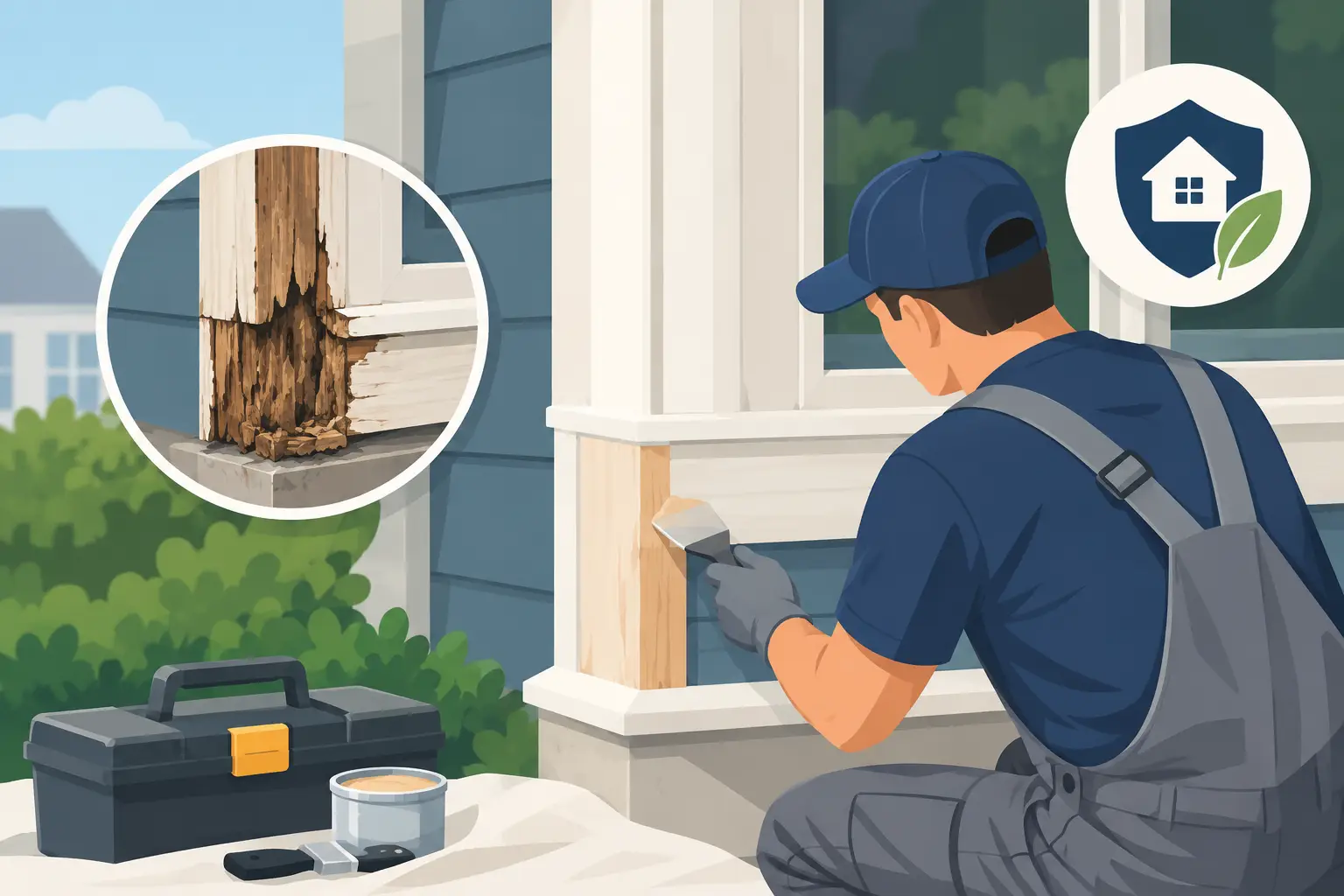
A soft window sill, cracked fascia board, or peeling paint near a door is rarely just a cosmetic problem. Moisture has often been entering the assembly for months, and the visible damage may represent only part of the issue. Professional wood rot repair addresses both the deteriorated material and the water source that allowed the damage to begin.
For homeowners, property managers, and HOA boards, timely repairs protect more than appearance. They help preserve structural components, prevent more extensive reconstruction, and keep exterior details performing as intended. The right scope depends on where the rot is located, how far it has spread, and whether the surrounding framing remains sound.
What Causes Wood Rot?
Wood rot develops when wood stays wet long enough for fungi to break down its fibers. In San Diego County, rain is not the only concern. Irrigation overspray, coastal moisture, plumbing leaks, failed caulking, roof runoff, clogged gutters, and poorly flashed windows can all create the conditions rot needs.
Exterior trim is especially vulnerable because it sits at transitions between siding, roofing, windows, doors, and stucco. These areas rely on careful flashing, sealant, paint, and drainage details. Once one layer fails, water can move behind the finished surface and become trapped where it is difficult to see.
Rot can also occur indoors. A slow leak under a sink, behind a shower wall, around a toilet, or near a water heater may damage subflooring, wall framing, cabinets, and baseboards. The key issue is not simply replacing stained or soft wood. The moisture pathway must be corrected before new materials are installed.
Signs You May Need Wood Rot Repair
Some warning signs are easy to spot, while others show up as subtle changes in a finished surface. Wood that feels soft when pressed, crumbles at an edge, or accepts a screwdriver unusually easily should be evaluated. Paint that repeatedly bubbles or peels in one location can also indicate moisture beneath the surface.
Look closely at window and door trim, fascia, eaves, deck posts, railing connections, siding edges, and areas where wood meets concrete or soil. Inside, warped flooring, loose tile, musty odors, swollen baseboards, and staining around openings may point to concealed moisture damage.
A visual inspection alone does not always reveal the full scope. Rot can travel behind stucco, siding, or trim while the exposed face appears mostly intact. Removing a small section of finish material may be necessary to determine whether the problem is limited to trim or has reached sheathing and framing.
When a Repair Can Be Localized
Localized repair is often possible when the affected area is small and the surrounding wood is dry, firm, and properly supported. For example, a damaged section of exterior casing or fascia may be removed and replaced without rebuilding the larger wall or roof area.
This approach works best when the cause is clear and correctable, such as failed caulking at a window corner or a short section of gutter overflow. The replacement wood should be installed with appropriate flashing, spacing, fasteners, sealants, and protective coating so the repaired area performs better than the original detail.
When Replacement Needs a Larger Scope
More extensive work is needed when rot reaches structural framing, floor joists, roof rafters, wall plates, or deck support members. Wood that has lost strength cannot be made structurally reliable with filler, paint, or a surface patch. Covering it can delay discovery while allowing the underlying damage to continue.
Replacement may also need to expand when moisture has affected multiple connected materials. A deteriorated window sill, for example, may involve trim, sheathing, insulation, drywall, and framing beneath it. The right repair sequence is to remove compromised materials, inspect the assembly, correct the water-management issue, rebuild with sound materials, and restore the finish.
Why Surface Patches Are Not Always Enough
Epoxy fillers and wood repair products have a useful place in maintenance work. They can help restore small, shallow areas after all damaged wood has been removed and the remaining material is dry and stable. They are not a substitute for replacing deeply decayed boards or compromised structural components.
The trade-off is straightforward: a quick patch may cost less initially, but it can be the more expensive choice if it masks moisture, fails early, or leaves unstable wood in place. A durable repair begins with an honest assessment of what is still sound.
Property owners should also be cautious about repainting over suspected rot. Fresh paint may improve appearance temporarily, but it cannot stop fungal decay or correct failed flashing. Paint belongs at the end of a repair process, after the substrate, drainage, and protective details have been properly addressed.
A Professional Wood Rot Repair Process
A dependable repair process starts with investigation, not assumptions. The goal is to identify the extent of decay and the source of moisture before setting the final scope of work.
First, the affected area is inspected for softness, staining, failed sealant, gaps, improper drainage, and damage to adjacent finishes. Where needed, damaged trim, siding, drywall, or stucco is carefully opened to examine the concealed materials. This step helps prevent a partial repair that leaves active damage behind.
Next, deteriorated wood is removed back to solid material. If framing or structural supports are involved, the repair may require temporary support, selective reframing, or replacement of damaged members. New materials are then installed with attention to proper alignment, fastening, flashing, and separation from moisture-prone surfaces.
Finally, the area is restored with the appropriate exterior or interior finish. That may include siding, trim, stucco patching, drywall repair, texture, paint, flooring, or tile work. Coordinating these trades under one repair plan reduces handoffs and helps ensure the finished assembly is complete, not merely covered over.
Common Areas That Deserve Prompt Attention
Wood rot can affect nearly any building component that is exposed to recurring moisture. The most common repair areas include:
- Window and door trim, sills, jambs, and exterior casings
- Fascia boards, rafter tails, eaves, and roof edge details
- Wood siding, corner boards, decorative exterior trim, and soffits
- Deck boards, stair stringers, railings, posts, and ledger connections
- Bathroom subfloors, kitchen cabinet bases, and framing affected by leaks
Deck and balcony repairs deserve particular care. A rotted board may be a finish issue, but decay at a post base, beam, ledger, or fastener connection can affect safety. Commercial and HOA properties should treat loose railings, soft walking surfaces, and damaged support areas as priority maintenance items rather than deferring them to a future improvement cycle.
Preventing Rot After the Repair
Long-term performance depends on routine observation and early maintenance. Keep gutters and roof drainage paths clear, direct irrigation away from walls and trim, and address deteriorated sealant before gaps grow. Check around windows, doors, exterior penetrations, and roof transitions after heavy rain or when you notice recurring paint failure.
Exterior paint and coatings also need maintenance, especially on sun-exposed or coastal-facing elevations. A protective coating is only effective when the wood beneath it is dry, properly prepared, and free of active decay. Repainting without correcting cracks, failed joints, or drainage problems simply resets the clock on the same issue.
For managed properties, documenting recurring moisture locations can make maintenance more efficient. If the same building elevation, planter edge, or window type continues to show damage, there may be a larger design or drainage detail worth correcting across the property.
Choosing the Right Contractor for Rot Repairs
Wood rot frequently crosses multiple construction categories. One repair may require carpentry, framing, window work, flashing, drywall, painting, stucco repair, or flooring restoration. Working with a contractor who can coordinate the complete scope helps avoid the common problem of one trade fixing the visible symptom while another issue remains unresolved.
Ask how the contractor will identify the moisture source, what materials will be removed for inspection, and how the repaired area will be protected from future water intrusion. Clear answers, documented scope expectations, and careful finish restoration are signs of an accountable repair process.
RTV Construction approaches property repairs with the same attention to detail required for larger remodeling work: identify the problem, complete the necessary repairs correctly, and restore the area with durable workmanship. A small soft spot can become a major repair when it is ignored, but prompt action gives your property the best chance to stay sound, safe, and well protected.
Leave a Reply