
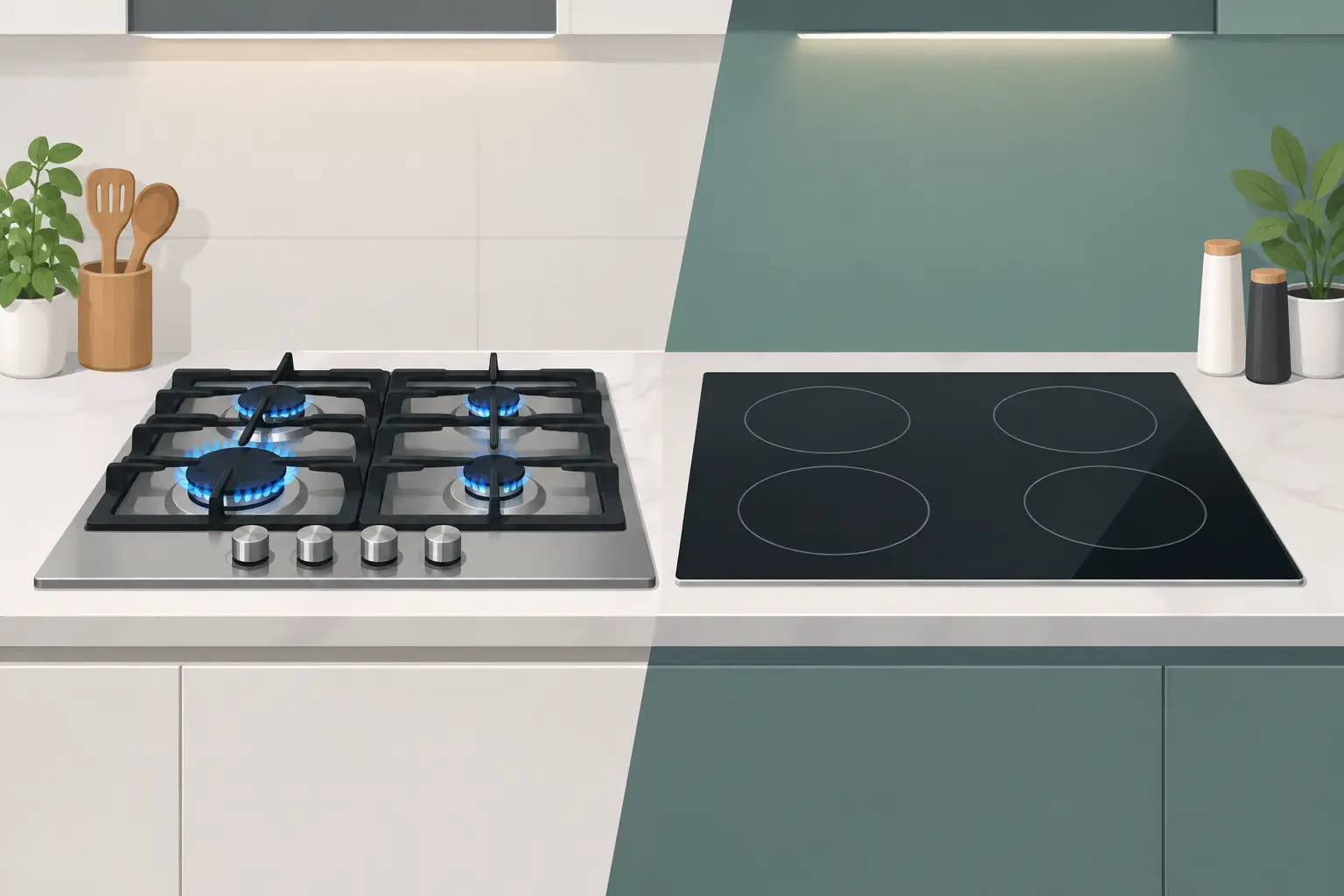
A cooktop choice affects more than the look of a kitchen. It shapes how meals are prepared, how easily the surface is cleaned, what utilities must be installed, and how the finished kitchen performs for years. When weighing gas versus electric cooktops, the best decision comes down to cooking habits, existing infrastructure, safety priorities, and the scope of the remodel.
For a kitchen renovation, the appliance should not be selected in isolation. Cabinet dimensions, countertop material, ventilation, gas piping, electrical capacity, and resale expectations all deserve consideration before installation begins. A well-planned decision avoids expensive changes after countertops are cut and finishes are complete.
Gas Versus Electric Cooktops: The Core Difference
Gas cooktops create heat with an open flame. Cooks can see the flame level, adjust it immediately, and use a wide range of cookware. Electric cooktops use heating elements beneath or within the cooking surface. They may have exposed coil elements, smooth radiant glass surfaces, or induction technology.
The phrase “electric cooktop” covers several very different products. A conventional radiant cooktop heats the glass surface first, which then transfers heat to the pan. Induction cooktops use magnetic energy to heat compatible cookware directly, while the surrounding glass stays comparatively cool. That distinction matters because induction performs differently from older electric models in speed, control, cleaning, and electrical requirements.
Neither option is automatically right for every property. A homeowner who cooks daily with heavy pans may prioritize direct flame control. A household with young children, an aging resident, or a preference for easy cleanup may value an electric or induction surface. For rental, commercial, and HOA-managed properties, durability, operating rules, and maintenance access may carry more weight than personal cooking preferences.
Why Homeowners Choose Gas Cooktops
Gas remains a familiar choice for serious home cooks. Its greatest advantage is immediate visual feedback. Turn the knob, and the flame changes right away. That responsiveness makes it easy to move from a high boil to a gentle simmer and is especially appealing for wok cooking, charring peppers, and cooking with cookware that does not work on induction surfaces.
Gas cooktops can also continue operating during a power outage when manually lit, depending on the appliance model and local conditions. In areas where outage preparedness is a concern, that capability can be useful.
From a kitchen-design standpoint, gas units are available in many sizes and burner configurations. A properly installed gas cooktop can support a traditional, professional-style kitchen appearance and may appeal to buyers who strongly prefer cooking over an open flame.
The Trade-Offs With Gas
Gas cooking produces combustion byproducts and adds heat to the kitchen. Proper ventilation is not simply a finishing touch. It is a practical part of a safe, comfortable installation. A correctly sized range hood that exhausts outdoors can help manage heat, moisture, grease, and cooking pollutants.
Cleaning also takes more effort. Burner grates, caps, and recessed areas collect spills and grease, requiring routine removal and detailed cleaning. The open flame introduces another safety consideration, particularly in homes with young children, pets, or tenants who may not be as careful with appliance use.
Installation may be more involved if the kitchen does not already have a gas line in the correct location. Extending piping, confirming shutoff access, coordinating ventilation, and meeting local code requirements all affect the project budget and schedule. A qualified contractor should assess these conditions before a final appliance selection is made.
Why Electric and Induction Cooktops Appeal
Electric cooktops offer a clean, streamlined appearance and a generally simpler surface to maintain. Smooth glass models have no grates or burner caps to remove. Once the surface has cooled, most spills can be wiped away quickly, making them practical for busy households and properties where easy cleaning matters.
Conventional electric radiant cooktops are often less expensive to purchase than premium gas or induction units. They can be a reasonable replacement option when a home already has suitable electrical service and the owner wants a modern, uncluttered surface without modifying gas piping.
Induction cooktops deserve separate attention. They heat pans quickly, provide highly responsive temperature adjustments, and waste less heat into the room than gas or radiant electric cooking. Because the glass outside the pan stays cooler, an induction surface may reduce the risk of burns from residual heat, though the cookware itself remains hot.
For many kitchen remodels, induction provides the performance homeowners expect from gas with the cleaning and safety advantages of a smooth electric surface. It can be especially attractive in warmer parts of San Diego County, where reducing excess kitchen heat can improve comfort during much of the year.
The Trade-Offs With Electric
Radiant electric surfaces are slower to heat and cool than gas or induction. The cooking zone can remain hot after the control is turned off, so users need to pay attention to hot-surface indicators. Glass cooktops can also scratch or crack if heavy cookware is dropped on them, and they require cleaners designed for the surface.
Induction has its own requirements. It requires magnetic cookware, such as many cast-iron and stainless-steel pans. Aluminum, copper, and some stainless cookware may not work unless they have a magnetic base. Some homeowners need to replace part of their cookware collection when switching to induction.
Electrical capacity is another major consideration. Many electric and induction cooktops require a dedicated 240-volt circuit. Older homes may need panel evaluation or electrical upgrades before the appliance can be installed safely. That work should be identified early, not after cabinetry and countertops have been completed.
Installation Details That Affect the Right Choice
The best cooktop for the space is one that can be installed correctly without compromising other parts of the remodel. Before ordering an appliance, confirm the cutout dimensions, required clearances, countertop specifications, and cabinet space below the unit. A cooktop that technically fits the opening may still conflict with drawers, ovens, support framing, or ventilation components.
Gas installations require properly sized gas piping, an accessible shutoff valve, and a leak-tested connection. If a new hood is part of the project, duct routing must be planned around ceiling framing and exterior-wall access. Recirculating hoods can be useful in limited situations, but they do not remove cooking moisture and combustion byproducts from the home the way exterior venting does.
Electric installations require the right voltage, amperage, wiring method, and dedicated circuit. For induction, appliance specifications should be reviewed before rough electrical work begins. This is particularly important in whole-kitchen remodels, where lighting, wall ovens, dishwashers, disposal circuits, and additional outlets may already be increasing demand on the electrical panel.
Countertop selection matters as well. Stone, quartz, solid surface, and laminate each have different fabrication and support considerations. The appliance opening should be cut only after the final cooktop specifications are confirmed. Careful coordination protects expensive materials and keeps the installation looking precise.
How to Decide for Your Property
Start with how the kitchen will actually be used. If you enjoy flame-based cooking, use varied cookware, and already have reliable gas service and exterior ventilation, gas may be the better fit. If easy cleanup, a cooler cooking surface, and a modern flush-mounted appearance are priorities, electric or induction may offer better long-term convenience.
Then consider the condition of the property. Replacing an existing gas cooktop with another gas unit can be straightforward when the piping, shutoff valve, and ventilation are in good condition. Changing from gas to electric, or electric to gas, may involve utility work that changes the project scope. In a rental or managed property, selecting a durable, easy-to-operate model can reduce maintenance calls and simplify turnover cleaning.
Budget should include more than the appliance price. Account for electrical upgrades or gas-line work, ventilation changes, countertop fabrication, permits when required, and any repairs needed after removal of the old cooktop. A lower-priced appliance can become the more expensive choice if it requires major infrastructure changes.
Plan the Cooktop With the Full Remodel
Cooktops sit at the intersection of plumbing, electrical, cabinetry, countertops, ventilation, and finish work. Coordinating those trades early protects the schedule and prevents avoidable rework. RTV Construction approaches kitchen improvements with that full-project perspective, helping property owners align appliance selections with the durable details behind the finished surface.
The right cooktop is the one that supports the way the kitchen will be used while fitting the home’s utilities, safety needs, and renovation goals. Make the decision before final measurements and fabrication begin, and the kitchen will be easier to build, easier to maintain, and better prepared for years of daily use.
Leave a Reply